The Sealed Letter
My husband Zane and I were married for thirty-four years, and in those thirty-four years I believed I had arrived at a complete understanding of who he was.
Marriage
Not because I was naïve about marriage—I understood that people contain private rooms, that thirty-four years together does not produce complete transparency, that there are thoughts and memories and experiences that remain a person’s own regardless of how close two lives are woven together. I understood this intellectually. But I also believed, in the way you believe things after long and honest companionship, that I knew the shape of Zane’s interior life. Not every detail, but the shape.
I was mostly right. And partly wrong in a way that has changed me.
Zane was a structural engineer. He built bridges—not metaphorically, actually. He spent his career designing the load-bearing mathematics of spans across water and gaps, the specific calculations that allow weight to cross from one place to another without failing. He found this beautiful in a way that not everyone understands until they’ve watched someone describe their work with genuine love, and then you understand that beauty is not only in the things we typically call beautiful.
He was a patient man. Not patient in the passive sense—he had opinions and he expressed them—but patient in the sense that he was willing to let things take the time they required. He was not a person who rushed resolutions. He believed that most things revealed their nature if you were willing to wait for it.
He was also private, in specific ways. Not secretive—I want to make this distinction because it matters. He was not a man who concealed things from me. But he held certain things quietly, carried them without requiring them to be shared, understood that some experiences lived most fully inside the person who had had them.
I had respected this about him. I had not always been certain what I was respecting.
The illness arrived in March and moved quickly in the way of things that do not intend to leave room for adjustment. The doctors were honest with us—not brutal, but honest, which is the thing you want from doctors when the honesty is difficult. We had months, they said. Perhaps fewer.
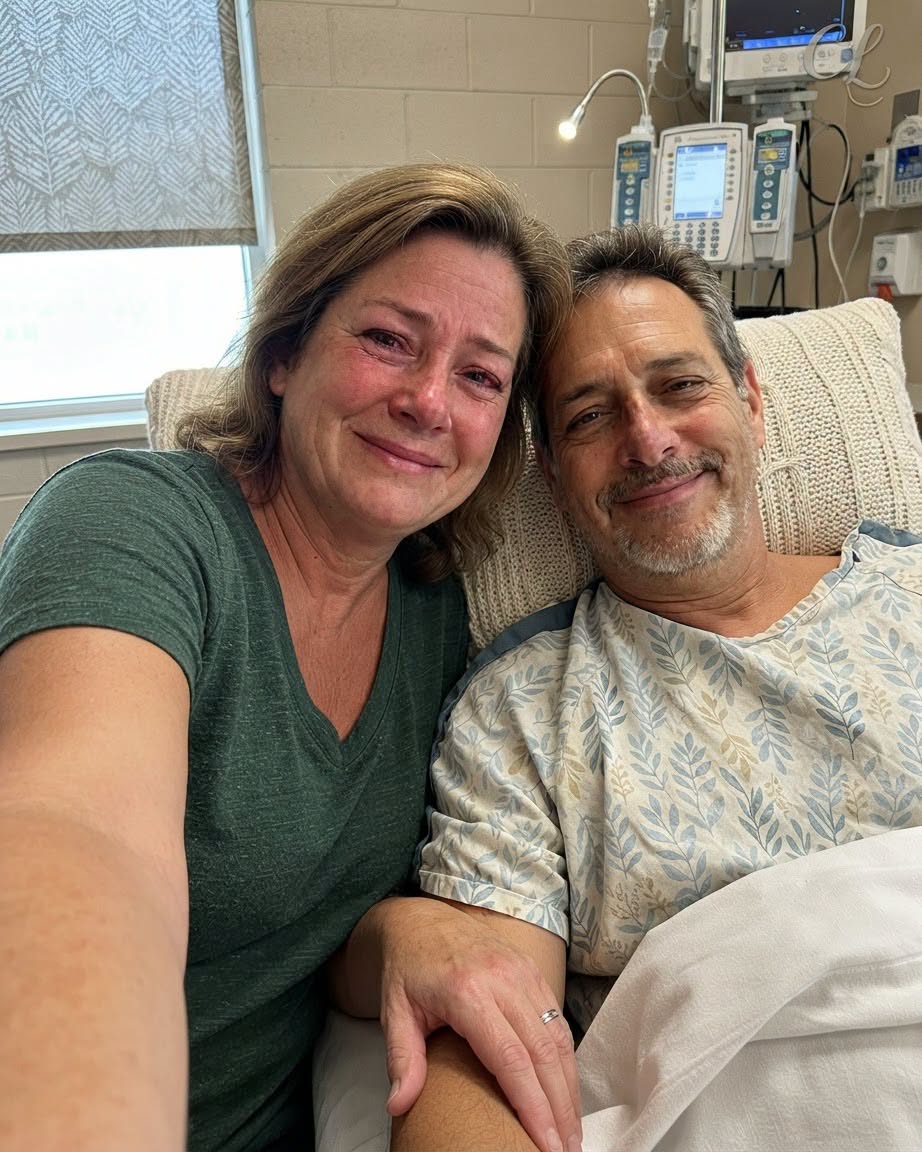
I became the kind of person I had not been before: the kind who knows where to park at the hospital, who has memorized the cafeteria hours, who has developed relationships with the nursing staff based on shared daily presence. I sat beside Zane’s bed and we talked and we were quiet and I brought things from home to make the room feel less like a room and he told me repeatedly that I didn’t have to stay as long as I did.
“I want to,” I always said.
“I know,” he always said.
Two days before the end, he reached into the bedside drawer.
I noticed the gesture because it was deliberate in a way that was different from the ordinary movements of a man who has been largely bed-bound for weeks. He was being precise about it. He had been keeping something there, and he had decided that two days before the end was the right time to give it to me.
The envelope was sealed. A woman’s name on the front—Margaret Ellis—and an address written on the back in Zane’s engineering handwriting, which was very neat and specific.
He placed it in my hands and looked at me.
“If I’m not able to do this myself,” he said, “promise you’ll deliver this to her personally. And leave it sealed for her.”
I looked at the envelope. I looked at the name I had never heard.
“I promise,” I said.
He relaxed back against the pillow.
I did not ask who she was. I wanted to—the question was present and immediate. But something about the quality of what he had asked, the care with which he had phrased it, told me that the question was mine to hold and not mine to require answered. He had given me the task. The explanation, if there was one, was not owed to me in this moment.
He died on a Saturday morning. Quietly, which was consistent with who he was.
The following weeks were the weeks that follow a death—a particular kind of time that is both suspended and accelerated, in which ordinary things require unusual effort and unusual things happen ordinarily. The memorial. The arrangements. The phone calls. The specific weight of the condolences that are genuine and the specific different weight of the ones that are performed.
CommunicationsEquipment
I forgot about the envelope.
I want to be honest about this because it matters: I forgot. Not because it wasn’t important—it was, clearly, one of the last things he had asked of me—but because the capacity for holding things has limits and grief uses most of that capacity.
Two days after the memorial, I found it in my bedside drawer.
I had put it there, apparently, on the night he died, in the automatic way of someone processing more than they can manage. I did not remember doing this.
I looked at the name for a long time.
Margaret Ellis.
I did not look her up online, which I considered and decided against. Zane had asked me to deliver the letter sealed. The spirit of that request, it seemed to me, was that I should not seek information about its contents or its recipient before she had received it. Whatever this was, it was hers and not mine.
The following morning, I drove.
The address on the back of the envelope was three hours from our home—north, into a part of the state I knew only in the way of driving through on the way to somewhere else. I had allowed myself no plan beyond arriving at the address and delivering the envelope to the person who answered the door.
I rehearsed what I would say. I abandoned the rehearsal. I rehearsed again.
In the end, I said nothing planned. I said my name. I said that I was Zane’s wife. And then I said that he had passed away ten days earlier and that he had asked me to bring her this.
The woman who opened the door was perhaps seventy. White-haired, with the particular quality of someone who has been outdoors often over a long life—her face had that specific outdoor quality. She was wearing a gardening apron. Behind her, through the open door, I could see a garden that was clearly her primary occupation.
When I said Zane’s name, her expression changed.
It was not surprise exactly. It was more like recognition arriving—something she had known was possible, or perhaps had wondered about, and had now arrived.
She took the envelope. Her hands were not entirely steady.
She opened it on the doorstep, which I had not expected. I had thought she would take it inside. But she opened it right there, in the morning light, and she unfolded the letter and she read.
She read the first line.
Then she lowered the letter and looked at me.
“Did Zane ever tell you about this?” she asked.
Her name was Margaret Ellis, which I had known from the envelope. She had known Zane forty years earlier, before he and I had met. She invited me inside—something I had not expected either—and the garden I had seen through the door turned out to extend through the back of the house in a way that made the whole space feel like a house that had grown up inside a garden rather than the other way around.
She made tea. I sat at her kitchen table, which was the kind of table that has been sat at for decades and has accumulated the specific character of that.
She did not read the rest of the letter in front of me. She folded it and held it and told me instead.
Forty years ago, Zane had been twenty-six and had been working on his first significant project—a bridge replacement in a small county in northern Pennsylvania. He had been young and the project was challenging and he was learning the distance between engineering school and engineering in practice.
Margaret’s son had been involved in a construction accident on that bridge project. He had been nineteen. The accident was serious—he survived, but the recovery was long and the consequences were permanent in some ways that took years to fully understand.
The accident had been investigated. It was determined to be a result of a combination of factors, and the determination had been specific about those factors. Zane had been involved in the investigation—he was not found to have erred in his design, but the investigation had been difficult, and he had spent months inside the uncertainty of it, and he had known Margaret and her son in those months.
“He came to the hospital,” Margaret said. “More than once. My son didn’t know him well—they had met on the site but hadn’t spent time together. But Zane came. He sat with us. He brought things sometimes—food, mostly, when we were living on cafeteria coffee.”
She held her tea cup with both hands.
“He was not required to do any of that,” she said. “The investigation had cleared him. He could have moved on. Most people in his position would have moved on.” She paused. “He didn’t move on.”
Her son had recovered fully from the most serious aspects of the injury. He lived now in another state—she mentioned this with the ease of a woman who has made peace with the geography of an adult child’s life. He was well. He had children.
“Zane stayed in touch,” she said. “Not often, not intrusively. Cards at the important moments. A note when something happened. He remembered because he had decided to remember.” She looked at me. “Did he tell you about this?”
“No,” I said.
She nodded as though she had expected this answer.
“I thought perhaps not,” she said. “He was not a man who needed credit for what he did. He did things because they needed to be done.”
I thought about this—about Zane and his quality of patient doing. The way he approached problems and stayed with them.
“What does the letter say?” I said. Then: “I’m sorry. You don’t have to tell me.”
“He would want you to know,” she said.
She unfolded it.
She read the first line aloud—the line she had read on the doorstep, the one that had made her look up at me.
Dear Margaret, I want to tell you something I should have said forty years ago.
The letter was two pages.
She read it to me, which she had decided to do and which I received with the specific gratitude of someone who understands they are being given access to something they are not necessarily owed.
Zane wrote that the accident had stayed with him—not as guilt, because the investigation had confirmed he was not at fault for the design, but as a lesson about the gap between not being at fault and not being responsible. He had been the engineer on the project. The project had had a failure. A nineteen-year-old boy had been seriously injured. These facts existed in the same space regardless of the legal and investigative determination.
He wrote that coming to the hospital had not been done out of guilt. He was clear about this distinction. It had been done because the alternative—moving on, as most people would have—had seemed wrong to him in a way he couldn’t fully explain. He had been present in the project. The project had resulted in a person being hurt. He could not change that. He could be present while the person was recovering.
He wrote that Margaret’s grace, in that period, had taught him something. He had arrived at the hospital uncertain of his welcome and found instead a woman who was not interested in assigning blame to him, who understood complexity more than her circumstances required her to.
You were never unkind to me, he wrote. In a time when you were managing your own fear and exhaustion, you were never unkind to me. I want you to know that this stayed with me for forty years. I have thought about it often, particularly in the difficult moments of my career, when something has gone wrong and I have had to decide how to be in relation to that wrongness. I have thought about the way you spoke to me in that hospital corridor and I have tried to be, in similar circumstances, the kind of person you were.
He wrote about his career after that project—the decades of bridges, the span across the river in Ohio that won a design award, the smaller bridges that he found more satisfying because they connected communities that had been waiting for the connection. He wrote that he had never worked without thinking about the fact of occupation—that a bridge is not just a structure but the passage of specific people, that the weight calculations are not abstract but are the weight of the people who will cross it.
I learned to think this way from that project, he wrote. From what happened and from what I saw in you afterward. I carry both. I wanted you to know.
He wrote about his illness in a single paragraph—matter-of-fact, the way he had been with me about it, the way he was with most things that he had decided to accept rather than resist. He wrote that he had wanted to deliver this letter himself and had not been able to, and that if she was reading it, his wife had delivered it on his behalf, and that if she had a moment to spare for the woman who had driven three hours with a sealed envelope, she would find the time well spent.
She doesn’t know any of this, he wrote. But she will understand it when you explain it, because she has always understood the things that matter.
Margaret lowered the letter.
We were quiet for a moment.
“He was certain about you,” she said.
“Was he?” I said.
“He didn’t explain this story to most people,” she said. “He was very clear about that in the letter. But he was certain that if he told you, you would understand.”
“I think I do,” I said. “Though I’m still—” I stopped.
“Still deciding what to do with it?” she said.
“Yes,” I said.
“That’s the right response,” she said. “He was a careful man. Careful things take time.”
She poured more tea.
“He sent me a card when my husband died,” she said. “Twelve years ago. It was a simple card. It said something about the specific difficulty of losing the person who knew your history. I have kept it.” She smiled. “I kept all of them. I have a small collection of Zane’s correspondence.”
“I had no idea,” I said.
“I know,” she said. “He told me he hadn’t said anything to you about this chapter. He called it a chapter, which I thought was a very particular way to put it.”
“He was specific about language,” I said.
“Yes,” she said. “He was.”
Her garden was visible through the kitchen window. It was elaborate and deliberate in the way of gardens that have been tended for many years by someone who has thought carefully about what belongs where.
“He was a good man,” she said. It was not a consolation—it was a statement of fact from someone who had observed and considered. “I want you to know that I know that from direct experience, not from the assumption you’d naturally make about a woman’s husband.”
“Thank you,” I said.
“He helped us,” she said. “Not in the ways that are easy to measure. He helped us by not leaving. That turns out to be the thing that matters most, in difficult times. The people who stay.”
I thought about Zane in the hospital beside his own bed, reaching into the drawer with the deliberate care of a man who had made a decision and was following through on it. The same person who had shown up at a hospital forty years earlier when he was not required to. The same way of being, across a lifetime.
I stayed for nearly two hours.
Margaret showed me her garden, which she had been tending for thirty years and which contained, she told me, a rose she had planted the year of her son’s accident. Not as a memorial—she was clear about this, the way Zane had been clear about distinctions in his letter—but as a marker. Something to tend in a difficult time that would grow into something else.
The rose was large and established now, as roses become when they have had thirty years and consistent care. It was blooming.
When I left, she held my hand at the door and said: “You didn’t open the letter.”
“No,” I said.
“He told me you wouldn’t,” she said. “He wrote that you were the kind of person who could hold a promise without needing to know what it contained.”
“He told you that?” I said.
“In the letter,” she said. “He wanted you to know he knew that about you.”
She released my hand.
“Drive carefully,” she said.
“I will,” I said.
The drive home was three hours, which I mostly spent with the radio off.
I thought about Zane, which is not different from what I do most of the time, but which was different in quality—I was thinking about the version of him that was forty years ago and twenty-six and showing up at a hospital when he was not required to, and I was putting that alongside the man I had known for thirty-four years and finding that they were consistent. The same person across time, which is not a guaranteed thing. Some people are not consistent across time. Zane was.
I had believed I knew the shape of his interior life.
I had known the shape.
What I had not known were all the specific contents of that shape—the particular things he had done, the particular moments he had carried, the specific way a project in northern Pennsylvania forty years ago had become part of the foundation of how he operated in the world.
He had not told me because he was not a man who needed credit. He had carried it as his own.
But he had sent me to deliver the letter. He had arranged for me to find out.
Not because he needed me to know—he had managed for forty years without me knowing. But because he had thought, apparently, that I would understand it. That it would add to my understanding of him without changing it, because the shape was consistent.
He had been right.
I pulled into the driveway at home in the late afternoon.
I sat in the car for a while.
Then I went inside, to the house that was quiet in the specific way of a house that has always had two people in it and now has one, and I made myself tea the way Margaret had made tea, and I sat at the kitchen table.
I thought about load-bearing mathematics. About what allows weight to cross from one place to another without failing.
I thought about a young engineer who had gone to a hospital when he was not required to, and a woman who had not been unkind to him, and thirty years of a rose that was now large and blooming in a garden that had been tended carefully.
I thought about the sealed letter that I had carried three hours without opening.
I was glad I had not opened it.
I was glad I had kept my promise.
I was glad, in the specific way of someone who has received unexpected information about a person they loved, that there was still something I had not known—that the shape of him was more full than I had understood, that the thirty-four years had not been the whole of him.
There is something good about that. About discovering, after a long time, that someone contained more.
He had been right to think I would understand it.
He had usually been right about the things that mattered.
I sat with my tea and the quiet and the knowledge of who he had been, which was the same as I had known and larger, and I stayed there until the light changed.
THE END


