I thought I knew my daughter better than anyone. Then one ordinary family dinner exposed a secret she’d been hiding in plain sight for years, and I realized I’d been missing the signs all along.
Family dinners at my house had always followed the same tradition.
Everyone sat together.
No exceptions.
It didn’t matter if you were 16 or 60. When I cooked, nobody served themselves first, nobody left the table, and nobody treated anyone else like they mattered less.
My late wife, Eleanor, had started that rule 35 years ago.
“Food tastes better when everyone shares it,” she’d always say.
After she passed away, I kept the tradition alive.
Maybe because it made the house feel like she was still there.
Maybe because it reminded us that family wasn’t just about blood.
It was about making sure nobody carried more than their share.
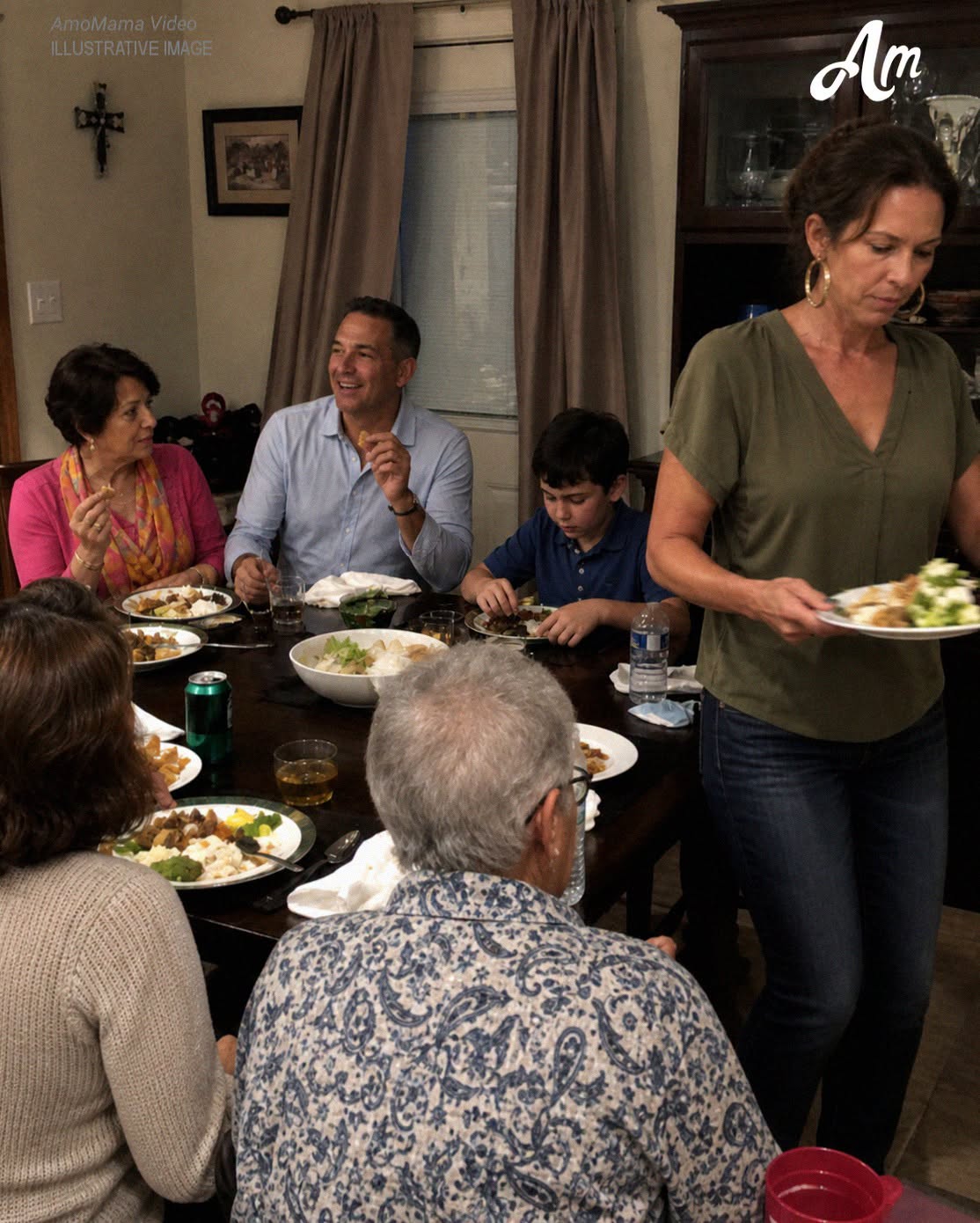
Every other Sunday, my daughter Mandy brought her family over.
My sister Kellen usually stopped by too, though she’d called earlier that afternoon to say she’d be running late because of traffic.
My younger brother, Walter, was already helping himself to the dinner rolls despite my glare.
“You haven’t changed,” I muttered.
He grinned.
“I haven’t been caught until now.”
Across the table, my eight-year-old grandson, Noah, giggled.
His little sister, Lily, copied him even though she had no idea why everyone was laughing.
For a moment, it felt like every other family dinner we’d ever had.
Exactly the way Eleanor would have wanted it.
Then Rowan looked at Mandy’s plate.
His smile disappeared.
“You forgot the gravy.”
Mandy looked up quickly.
“Oh. I can get it.”
She reached for the gravy boat.
Rowan gently placed his hand over hers.
“No.”
His voice stayed calm.
Too calm.
“You should clean the kitchen first.”
She blinked.
“The food will get cold.”
“You can eat afterward.”
The room went silent.
For one long second, I honestly thought I’d misheard him.
Mandy didn’t argue.
She simply lowered her eyes.
“Okay.”
Then quietly pushed back her chair.
“I’m sorry,” she whispered to the rest of us.
She picked up her untouched plate and, without another word, carried it into the kitchen.
I stared after her.
Nobody else moved.
Walter suddenly became fascinated by his mashed potatoes.
The children kept looking down at their plates.
Even Rowan calmly picked up his fork and began eating.
Like nothing unusual had happened.
Like my daughter washing dishes instead of eating dinner was the most natural thing in the world.
Something cold settled in my chest.
I looked toward the kitchen.
Mandy was already rinsing plates. Then she started washing the pans I’d spent two hours cooking with.
Her shoulders sagged with exhaustion.
Dark circles shadowed her eyes.
When had those appeared?
Her hands trembled ever so slightly as she scrubbed at a baking dish.
I couldn’t remember the last time she’d looked rested.
How had I missed that?
My daughter had always been the loud one.
The stubborn one.
As a little girl, she’d argued with teachers if she thought they were wrong.
She’d climbed trees wearing dresses.
She’d once marched into the principal’s office because another student was being bullied.
She’d never been afraid to speak.
The woman standing at my sink looked like a stranger.
I slowly set my fork down.
The sound echoed through the room.
Rowan looked at me.
“What?”
I nodded toward the kitchen.
“I think you’ve forgotten something.”
He followed my gaze.
“Mandy likes staying busy.”
“I wasn’t talking about the dishes.”
He leaned back comfortably.
“Then what were you talking about?”
“My daughter.”
He smiled.
Not kindly.
Patiently.
Like I was the one being unreasonable.
“Charles,” he said, “she always insists on cleaning while everyone else finishes eating.”
I looked toward Mandy.
She hadn’t looked back once.
Not once.
“You let her?”
Rowan frowned.
“She wants to.”
“Does she?”
“She’s taking care of everyone else first.”
He smiled.
“That’s just who she is. She’ll eat later.”
Later.
The word hit me harder than it should have.
I remembered something Noah had said a few months earlier.
“Grandpa, Mommy says food tastes the same cold.”
At the time, I’d laughed.
Now I wondered why.
My mind flashed back to Thanksgiving.
Mandy had spent all afternoon cooking beside me.
When dinner was finally ready, she’d smiled and said she wasn’t hungry.
I’d believed her.
God help me, I’d believed her.
How many excuses had I accepted because they were easier than asking questions?
I studied Rowan’s face.
He wasn’t embarrassed.
He wasn’t defensive.
He genuinely expected everyone at the table to accept this.
Walter cleared his throat.
“Maybe we should just…”
“No,” I interrupted.
“This is my house.”
Nobody spoke.
I pushed my chair back.
“If Mandy’s eating later, then we’re all eating later.”
Rowan frowned.
“That’s unnecessary.”
“No.”
I stood.
“My wife had one rule.”
I glanced around the table.
“Nobody eats alone.”
For the first time, irritation flickered across Rowan’s face.
“Charles, you’re making this into something it isn’t.”
“Am I?”
I walked toward the kitchen.
“Mandy.”
She immediately turned off the water.
“Yes, Dad?”
“Come sit down.”
She shook her head almost before I’d finished speaking.
“It’s okay. I’ll finish these first.”
“They can wait.”
“I don’t mind.”
I looked at her hands. They’d stopped trembling.
Not because she’d relaxed, but because she’d clasped them together tightly enough to hide it.
“I do.”
She offered me a tired smile.
The kind people wear when they’re trying to end a conversation.
“I’ll only be a minute.”
Behind me, Rowan spoke.
“See?”
He sounded almost amused.
“She wants to help.”
Mandy’s smile disappeared for the briefest moment.
Then it came back.
Smaller this time.
“I really don’t mind.”
Something inside me broke.
Not loudly.
Quietly.
The way old wood cracks after years of carrying too much weight.
Because suddenly I realized what I was seeing.
She wasn’t agreeing with him.
She was trying to keep the peace.
How many times had she done this before?
How many dinners?
How many holidays?
How many mornings had started with her putting everyone else first because she’d been taught she wasn’t allowed to do anything different?
A car door slammed outside.
A moment later, the front door opened.
“I’m so sorry I’m late,” a familiar voice called.
Kellen stepped inside carrying a pie.
She stopped smiling almost immediately.
Her eyes moved across the dining room.
The untouched place where Mandy should have been sitting.
Rowan eating comfortably.
Me standing in the kitchen doorway.
Then she looked at Mandy, still standing at the sink with an untouched plate beside her.
Kellen slowly set the pie on the counter.
Without taking her eyes off Mandy, she asked quietly, “Charles…”
Her voice was calm.
Too calm.
“Why is Mandy doing dishes?”
Nobody answered.
Then Noah looked up from his plate.
“Dad always eats first.”
Kellen turned toward him.
“What do you mean, sweetheart?”
He looked around the table, confused by everyone’s faces.
“Mom serves everybody. Then she cleans up. Then she eats.”
My stomach tightened.
Lily nodded.
“Sometimes Mommy says she’s not hungry.”
She frowned.
“But I think she is.”
The room went completely still.
Rowan set his fork down.
“Kids exaggerate.”
Noah frowned.
“I’m not exaggerating.”
He looked at his father.
“You said lying is a sin.”
Rowan forced a laugh.
“They don’t understand adult routines.”
Kellen ignored him.
She walked into the kitchen and gently took the dish towel from Mandy’s hands. “When was the last time you sat through an entire meal without getting up to serve everyone?”
Mandy hesitated.
“I don’t know.”
“When was the last time you finished a meal while it was still hot?”
Silence.
“When was the last time you bought clothes without asking him first?”
Mandy’s eyes widened.
I blinked.
“Kellen…”
She looked at me.
“Charles, I volunteer with women leaving controlling marriages.”
She looked at Mandy.
“The first thing they lose isn’t their freedom.”
“It’s permission.”
“Permission to rest.”
“Permission to sit.”
“Permission to eat.”
She glanced around the room.
“I don’t need months to recognize it.”
Rowan stood.
“That’s enough.”
“No,” Kellen said evenly. “I don’t think it is.”
He folded his arms.
“You don’t know anything about our marriage.”
“I know control when I see it.”
“It’s called respect.”
“It’s called fear.”
Mandy’s breathing became shallow.
“Please,” she whispered. “Don’t.”
Rowan immediately stepped toward her.
“See?”
He looked around the room.
“She’s upset because you’re attacking our family.”
Noah quietly asked, “Mom…”
She looked at him.
“…are we allowed to eat now?”
Nobody moved.
The little boy looked genuinely confused.
“When Dad gets mad at home, we all wait.”
Charles felt sick.
“What do you mean, buddy?”
Noah answered without hesitation.
“If Mom makes Dad upset, she has to wait until everybody else finishes.”
He looked toward Mandy.
“Sometimes she’s still being punished.”
Noah frowned.
“Sometimes Mom says she’s already eaten.”
He looked at Mandy.
“But she hasn’t. She just tells us that so we won’t worry.”
Mandy covered her mouth.
Tears spilled down her cheeks.
“Stop talking,” Rowan snapped.
Noah flinched.
Charles had seen enough.
“Don’t raise your voice at my grandson.”
Rowan pointed toward the children.
“They don’t understand discipline.”
I shook my head.
“They understand hunger.”
The words came out before I even realized I’d spoken them.
Rowan scoffed.
“Someone has to keep this family running.”
“Without structure, she’d fall apart.”
The room fell silent.
Rowan looked at Mandy.
“Say something.”
She stared at the floor.
“Tell them. Tell them this is what you wanted.”
Her shoulders shook.
“Mandy?”
She closed her eyes.
When she opened them again, something had changed.
She reached slowly into her purse.
Her fingers trembled.
“I…”
She couldn’t finish. She closed her eyes, took a shaky breath, and pulled out a large manila envelope.
“I was going to tell you after dinner.”
She looked at me.
“I just wanted one normal family meal first.”
Then she turned to Rowan and handed him the envelope.
His hands shook as he opened it. Inside were legal documents.
Divorce papers.
Emergency custody paperwork.
A lease for a small two-bedroom apartment.
Copies of bank statements.
Printed text messages.
Every page told the same story.
Mandy hadn’t decided to leave three days ago.
She’d been planning her escape for months.
I looked up. Mandy was crying openly now.
“I signed the papers three days ago. I’ve been planning this for almost seven months.”
Rowan stared at her, then at the papers.
His eyes darted from one page to the next.
“What is this?”
Nobody answered.
He flipped through the documents faster.
Then faster.
One page slipped from his hands. He snatched it off the floor without taking his eyes off Mandy.
“No. You filed?”
She nodded.
“Three days ago.”
He shook his head.
“You wouldn’t.”
He grabbed another page.
His eyes moved from the lease to the custody paperwork.
His voice cracked for the first time.
“You planned all of this.”
Mandy nodded.
“For months.”
He stared at her.
“Why?”
Mandy looked at him for a long moment.
“Because I was surviving you.”
“You’re embarrassing yourself.”
“Tell them the truth.”
Mandy looked him in the eye.
“I just did.”
She slowly shook her head.
“No. It’s because of thousands.”
She looked around the room.
“I stopped recognizing myself.”
She swallowed hard.
“I kept thinking if I tried harder… cooked better… stayed quieter…”
Another tear rolled down her face.
“…you’d finally be happy.”
“Then I realized something.”
“Happy people don’t make the people they love earn dinner.”
“Nothing I did was ever going to be enough.”
Nobody spoke.
“But every time I gave up another piece of myself, you just expected more.”
Don’t miss
Rowan stepped closer.
“We’re going home.”
Mandy didn’t move.
“We’ll talk about this privately.”
I stepped between them.
“No.”
Rowan glared at me.
“This doesn’t concern you.”
I met his eyes.
“The moment my daughter became afraid to eat at my table…” My voice stayed calm. “…it became my business.”
“She’s coming home with me.”
I looked him straight in the eye.
“No.”
I opened the front door.
“You’re leaving. She already is home.”
Mandy’s shoulders dropped.
It looked like she’d been holding that breath for years.
Rowan reached for her arm.
I caught his wrist.
“Don’t.”
It was the first time all evening Rowan looked uncertain.
“You’re tearing this family apart.”
I held the front door open.
“No.”
My voice was quiet.
“You’ve been pushing them away for years.”
Rowan looked at Mandy one last time.
“You’re really choosing them?”
She met his eyes.
For the first time that night, she didn’t look down.
“I’m choosing myself.”
He waited.
She didn’t move.
Neither did the children.
Finally, he walked toward the door.
Before stepping outside, he turned back.
“You’ll regret this.”
I smiled for the first time all evening.
“No.”
I shook my head.
“You will.”
The door closed behind him.
The silence that followed felt different.
Lighter.
Like the house itself had finally exhaled.
I couldn’t remember the last time I’d seen Mandy breathe that deeply.
She sank into a chair and buried her face in her hands.
I knelt beside her.
“You don’t ever have to apologize for coming home.”
She sobbed harder.
Noah leaned against her.
Lily wrapped her little arms around her waist.
Kellen picked up Mandy’s untouched plate.
She frowned.
“It’s cold.”
Without another word, she carried it into the kitchen.
A minute later she returned, setting the steaming plate gently in front of Mandy.
“There,” she said softly.
“Now it’s your turn.”
Mandy stared at it.
Then she looked around the table.
Every chair was waiting, just like it always had.
I smiled.
“Your mother used to say food tastes better when everyone shares it.”
I picked up my fork.
“So let’s try this again.”
Nobody started eating.
Not until Mandy did.
She took one bite.
Then another.
Noah smiled.
Only then did he pick up his own fork.
Lily copied her brother.
Tears still filled her eyes, but this time they weren’t from fear.
They were from relief.
As I watched my daughter finally eat a meal without asking permission, I realized something I’d forgotten after losing Eleanor.
A house isn’t home because of the person who owns it.
It’s home because everyone inside knows they belong.
And as long as I had a home, my daughter would never have to earn her place at the table again.
Enjoyed the read? Here is another story you will love: When my son laughed at our waiter with Down syndrome, I didn’t yell. I didn’t punish him. I simply took him home and told him a story I’d buried for 20 years—the story of the worst mistake I’d ever made.